





Is it relief or just more discomfort for Maryland’s taxpayers? It may take awhile for the impact of the state government’s fiscal 2026 budget and the ramifications of legislation passed by the Democratic majority during the 2025 session to be realized.
The latest 90-day General Assembly session ended Monday. At least three Southern Maryland lawmakers believe the senators and delegates will be coming back for a followup session later this year.
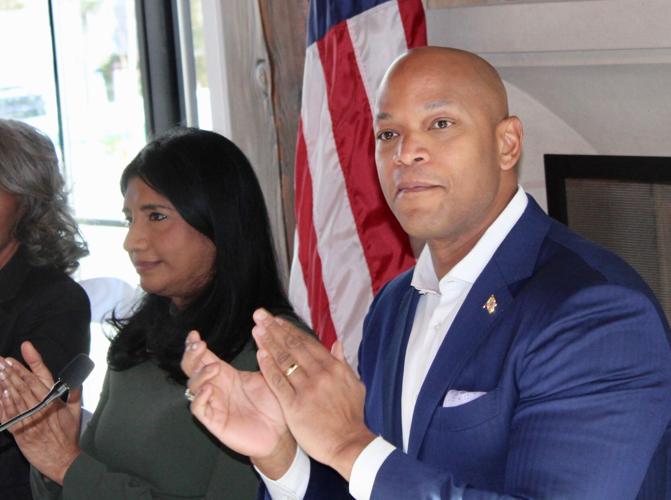
After the $67 billion budget for the next fiscal year was passed Monday, Maryland Gov. Wes Moore (D) declared his administration’s “three core objectives” were on track to be addressed. Those objectives were tax relief for middle-class families, economic growth and to invest in people.
“I’m proud of the budget deal we crafted with the Maryland General Assembly to flip the deficit we inherited into a surplus, while ensuring 94% of Marylanders get either an income tax cut or see no change in their income taxes,” Moore said in a statement released Monday night.
However, a joint statement from the Senate Republican Caucus called the budget’s passage “a deeply concerning moment for our state. With over $1.6 billion in new or increased taxes, this represents the largest tax hike in Maryland history.”
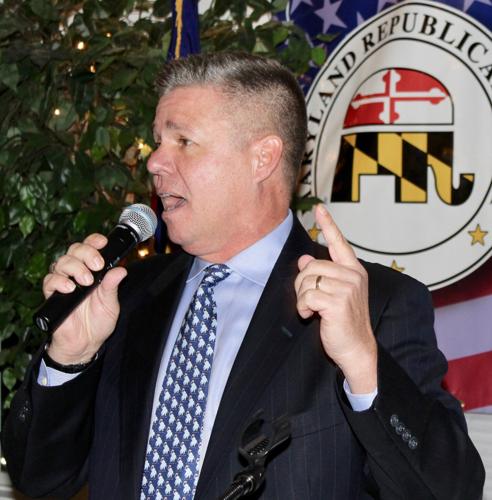
“Maryland still has a structural deficit,” Del. Mark N. Fisher (R-Calvert) told Southern Maryland News. The Democratic leadership, Fisher added, “is spending more than what’s coming in.”
Another local lawmaker, Del. Matt Morgan (R-St. Mary’s) said Democrats “needed $1.3 billion in special funds and increases to balance” the proposed budget.
“So now we have record high fees everywhere,” Morgan said, adding that in order to complete the balancing, “$1.6 billion in tax increases” were added.
“Those increases are broken up into 18 different things, taxing everything from the tires on your car to doubling vehicle emissions to creating a couple more millionaire tax brackets,” Morgan said.
“The entire session was focused on raising taxes,” Fisher said. “For the entire session we thought the focus would be ‘how do we make Maryland more business friendly?’ They [Democratic leadership] have done so much damage to Maryland’s economy. There doesn’t seem to be any end in sight.”
“We went into the session with a $3 billion budget deficit and we were looking at ways to close that structural deficit,” Morgan said. “Instead of making substantial cuts, what the governor did was cut a bunch of money from the rainy day fund, closed vacancies in state government and pushed off responsibilities that were traditionally with the state, such as teacher pensions, off to the county. Those aren’t real cuts.”
Moore had used a visit to Calvert County in early January to announce his state government efficiency initiative that he said would save $50 million.
“The governor has not implemented his agenda,” Fisher said.
“We had to raise certain state revenues, but we approached this process with care and a commitment to fairness,” Del. Edith Patterson (D-Charles) said in an end-of-session letter to constituents. “While not everyone got everything they hoped for in the final budget, we remained focused on core values.”
Patterson opined that some of the positives from the session included restoring funds for disability support services and cancer research, along with “grants for crime victims and aid for local governments.”
“One of the toughest decisions I’ve ever dealt with,” Sen. Michael A. Jackson (Calvert, Prince George’s, Charles) told Southern Maryland News. Of the fee increases, many related to motor vehicles, Jackson pointed out that some had not been raised in 20 years.
“Our roadways need help,” Jackson said, of the majority party’s push to bolster the transportation trust fund.
Local bills get mixed resultsFor Calvert County’s leaders, there was little to cheer about after the session ended. Commissioner President Earl F. “Buddy” Hance (R) announced last month that he had learned of the board-backed bills sponsored by the board would be coming out of committee.
However, one measure that did have the board’s support, granting collective bargaining provisions for full-time deputy sheriff’s and correctional deputies at the rank of major and below, did pass.
The commissioners sent two letters to the legislature regarding the bill. One was the request of an amendment that removes the board from the negotiating process, making the county sheriff the negotiator.
The bill originated in the senate and was sponsored by Jackson.
“I’ve been trying for decades to get some form of collective bargaining for law enforcement,” Jackson, a retired law enforcement officer and former fraternal order of police chapter president, told Southern Maryland News. “The Calvert County Sheriff’s Office is a terrific agency and its employees ought to have a say-so. It’s a step in the right direction.”
Jackson said there are now only a handful of counties in Maryland that do not have collective bargaining for the ranks of their primary law enforcement agency.
Among the scuttled Calvert bills was one that would have allowed for payments in lieu of taxes for owners and operators of data centers that might locate in Calvert.
Fisher and Hance both agree that passage of a 3% tax on information technology will dis-incentivize data center businesses from locating in Maryland since other states, such as Virginia and Pennsylvania, do not levy a tech services tax.
A St. Mary’s County request for an extra circuit court judge failed to pass.
“I was actually surprised,” Morgan said. “I know the judiciary and the judges down here would have backed the expansion, but there were some concerns about costs. But the wheels of justice need to keep turning.”
“I am proud to announce that Charles County has secured $397,000 in state funding to support a range of impactful local projects,” Patterson said. “This includes $75,000 for the Charles County Food Rescue Program, which helps address food insecurity in our community.”
We’ll be backFisher, Morgan and Jackson all told Southern Maryland News they believe a followup special session is coming later this year.
“The Democrats don’t want to raise taxes next year because it’s an election year,” Fisher said, adding that the majority party has not determined what technology businesses will have to pay the 3% tax.
The Calvert Republican also said that the Democrats who pushed for the measure may implement some “spot taxing” by exempting technology companies in proximity to the University of Maryland’s College Park campus.
“It’s a bad idea for the whole state,” Fisher said.
“I think the chaces of us going back in September, October are very high,” Morgan said. “I don’t think the budget is actually balanced. I don’t think the tax increases they are proposing will actually work and I don’t think they’ll get the revenue they’re anticipating.”
“We won’t realize the impact of the federal budget on Maryland until June,” Jackson said, adding that due to its proximity to the Nation’s Capitol, Maryland is heavily involved in federal government services.
During a bill signing ceremony in the governor’s Annapolis office, legislative leaders indicated a bipartisan committee charged with monitoring federal level government activities would be formed with findings likely up for discussion during the special session.


