



The return to Annapolis and the beginning of the Maryland General Assembly’s 2026 session culminates Jan. 14 as lawmakers convene for 90 days of discourse, debate and decisions.
In a repeat of last year’s session, the legislators are facing another revenue deficit and a mandate to craft a balanced budget. The hole that must be plugged totals $1.4 billion.
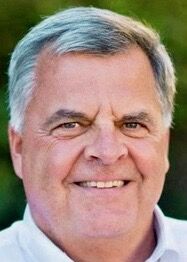
“It’s a mess,” Del. Todd Morgan (R-St. Mary’s, Calvert) said, adding that the deficit is a “self-imposed burden.”
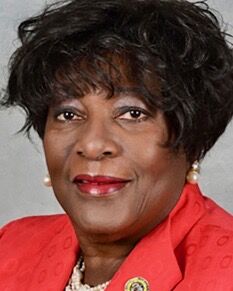
“The whole session will center around being fiscally responsible and meeting the needs that we’re required to do,” Del. Edith J. Patterson (D-Charles) said.
With 2026 an election year, the appetite among lawmakers from both parties for any tax increases will be sparse to non-existent.
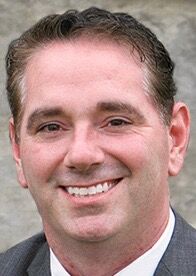
There will be a need to make statewide spending cuts, Del. Matt Morgan (R-St. Mary’s) said, pointing out that plans to expand Medicaid and continually fund the Blueprint for Maryland’s Future education reform plan will make the spending curb a difficult task.
“We have to be surgical and precise,” Del. Jeffrie E. Long Jr. (D-Calvert, Prince George’s) said of the legislature’s dealing with the next budget.
Long said the to-do list for the 90-day session is a challenge.
“We’ve got to figure out energy rates, redistricting, affordability issues, how to deal with artificial intelligence and all technologies, help people whose health care is in peril and do this without raising taxes,” Long said.
Wish listsTwo years ago, a bill was introduced related to requirements for building a living shoreline as a way to stop erosion imperiling waterfront homes.
Todd Morgan told Southern Maryland News he and his team spent a year brainstorming solutions. He indicated the aim of his proposed bill will be to “protect homeowners’ rights. [They] shouldn’t be required to install a living shoreline due to the high costs.”
He pointed out that Calvert and St. Mary’s waterfront terrain differs from other Maryland counties on the water.
“The prices double and triple for homeowners, making it more expensive for them to even afford their property,” Todd Morgan said.
Fellow delegate Matt Morgan said his list of legislative initiatives mostly involve “dealing with fixing problems that we’ve created from the year prior or dealing with governance.”
Two of the bills Matt Morgan is backing would improve nonprofit organizations’ transparency, which would be similar to the government’s transparency laws. The St. Mary’s lawmaker pointed out 31 states already have such a law.
Patterson, who is a member of the House of Delegates Ways and Means Committee, said she will be focused on continued funding of the Blueprint and other education-related concerns, such as keeping and increasing pre-kindergarten classes, finding ways to address teacher overload and burnout, and having options for students after they graduate from high school.
“That’s when it’s really necessary for the members of the legislature to work in tandem with the local boards of education,” Patterson said. “We must find some way to ensure our teachers are treated professionally [and] that we have a policy that will encourage them to stay in the profession.”
Energy issuesBoth Morgan delegates indicated they are opposed to any plans by Democrats to expand renewable energy in Maryland.
“People are getting priced out of Maryland,” Matt Morgan said. “We literally just have the dumbest energy policy in the nation. We import 40% of our electricity from across state lines at extraordinary cost to ratepayers because we’ve closed down electrical power plants. The solution is staring these guys right in the face — convert these things back into natural gas and we’ll be on our way. But that doesn’t fit into the legislature’s policy prescription for net zero by 2035.”
Patterson said Charles County lawmakers will have several bills to consider, including measures dealing with the environment and clean energy, and also the issue of data centers, which brings concerns about energy, the environment and technology to the table.
“These issues are futuristic, but they’re present issues,” Patterson said.
New leadershipLate last year, Del. Adrienne A. Jones (D-Baltimore County) announced she was stepping down as speaker of the house. A special session of the house that followed led to the election of Del. Joseline Peña-Melnyk (D-Prince George’s, Anne Arundel) as the new speaker.
Prior to a meeting of the House Democratic Caucus, three other candidates for the post, including Del. C.T. Wilson (D-Charles), withdrew their names from consideration. After the caucus approved Peña-Melnyk, the full house voted her in as the new speaker.
Despite anticipated partisan disagreements, Matt Morgan said he believes Peña-Melnyk will provide both sides with the opportunity to present their bills and share their thoughts.
“She’s always treated me with respect and is willing to hear both sides of the issues,” he said. “I think it would just behoove everyone to get back to a place where we actually debate ideas and allow people to make seated decisions.”
“She will have a continuous focus on the issues that we’ve tackled before,” Patterson said of Peña-Melnyk’s elevation to the speaker’s post.
Patterson said she and Peña-Melnyk have worked together on issues about health, autism and sickle cell disease.
“She took me under her wing,” Long said of Peña-Melnyk’s mentorship when he began his term in 2023. “I’ve always had a great relationship with her. She’s fair, no-nonsense and smart as a whip.”


