



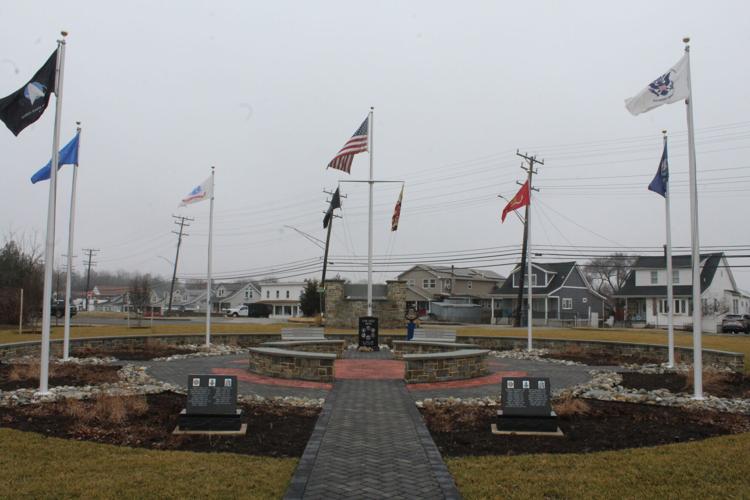
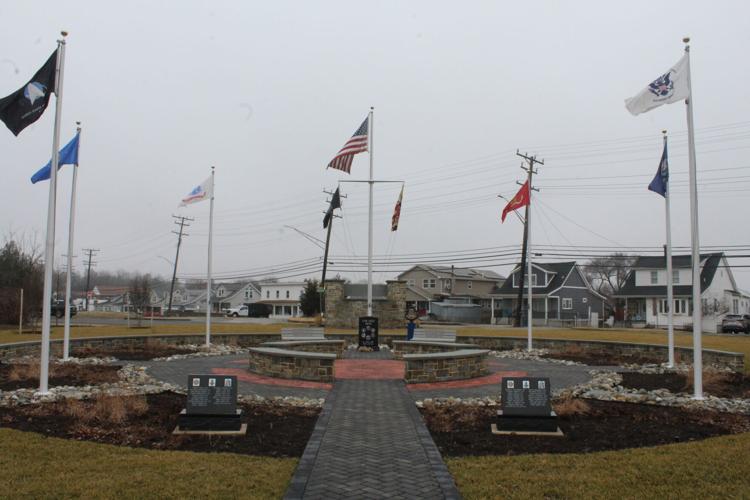
Wells McComas VFW Post No. 2678 opened a new Veterans Memorial Park last November to honor veterans and the military history of Edgemere, which dates back to the War of 1812 and the British invasion of Baltimore.
The park has led to even more history: Ancient artifacts.
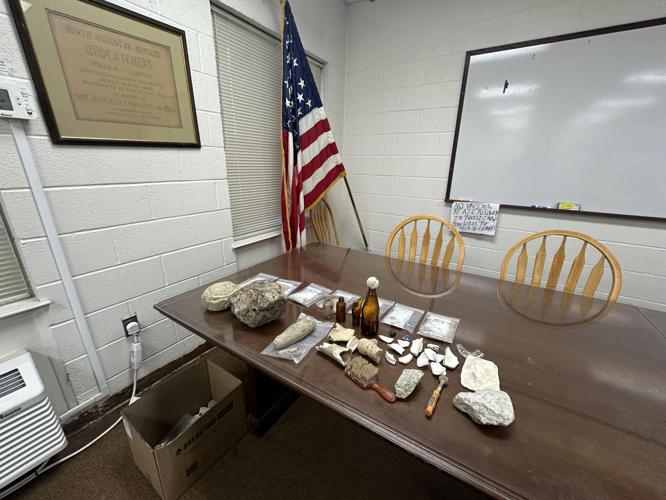
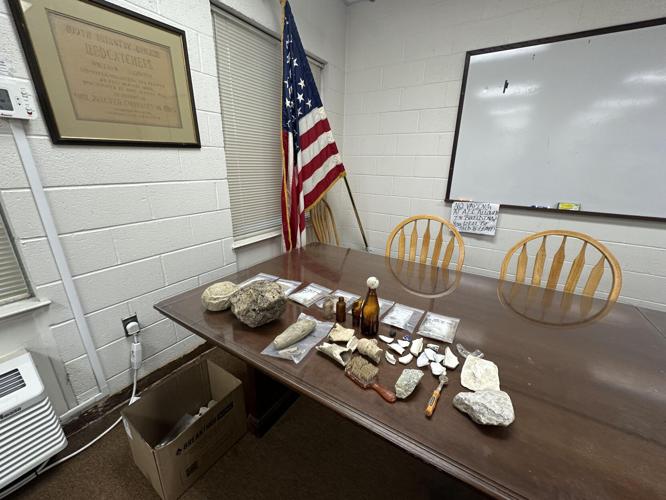
When the post began to dig out the foundation for the memorial, it came across a Native American spearhead used for woodworking and as a weapon known as a celt. Keith Taylor, president of the Sparrows Point North Point Historical Society, was not exactly sure what he found.
“I looked at it, and I was like, ‘You know what? This looks really strange. It’s nice. It’s real nice and smooth,’” Taylor said.
So Taylor reached out to Dr. Katherine Sterner, an anthropology professor at Towson University.
According to Taylor, Sterner fell all over the artifact.
“She was like, ‘Oh my gosh, that’s a beautiful celt,’” Taylor said.
Sterner said the celt has a bifacial thinning flake, meaning flintknapping was done on the celt in an attempt to sharpen it. Pecking marks were left on the celt, a key to getting Sterner’s attention.
While the post continued digging for the memorial, shovel tests were done in July 2025 to find more artifacts. The artifacts were all tagged, dated and photographed, including jasper, which is not local to the area.
Taylor said Sterner dated the artifacts to as far back as 5,000 B.C.
Before arriving at the post, Sterner had done fieldwork at the North Point State Park. She got a grant from the Maryland Historical Trust to fund student salaries for her student workers for four weeks in the field to conduct excavations at one of three Native American archaeological sites in the park.
Not too much of anything turned up.
While Sterner believes the sites in the park represent seasonal gathering places where people from different communities would come together, they weren’t places of year-round living.
Wanting a better understanding of other archaeological sites around the peninsula, Sterner wanted to continue working in the North Point area. That’s where the post came in.
“One of the things we’re really trying to do is develop a sort of cohesive narrative of the way that folks living on all these sites were interacting with each other, and sort of the whole settlement system,” Sterner said.
Sterner is going to do more shovel testing in the spring to find the areas that would be worth placing excavation units.
Sterner said there are three phases of excavation that occur in archaeology.
The first phase has already been completed, which determined whether the post could be a historical site through the Maryland Historical Trust. According to Taylor, because of that, if something were to happen with the post, the land would still be used as the memorial and a historical site.
The second phase is evaluative excavations, which evaluate if the site is eligible for listing on the National Register of Historic Places. The last phase is full-scale excavation.
On Friday, March 6, Sterner presented her final report to Taylor and a few members of the post with a Wawa-donated breakfast. Sterner went over her findings and next steps before sending her report to the Maryland Historical Trust.
According to the report, all eight shovel tests yielded late 19th- to early 20th-century glass and ceramics, in addition to the stone celt, jasper flakes and a grit-tempered cord-marked pottery shed.
Taylor said that through the trust, he hopes the post can still stay as private property but also gain protection.
The post will host a week-long K-12 educator workshop for Sterner in June.
Every year, educators from the Eastern Shore continue their professional development. Each teacher is responsible for putting together a lesson plan, which is then hosted on the Maryland Historical Trust website so that other teachers can use the plans in their classrooms, Sterner said.
The workshop has a little bit of everything, from presentations to guests from indigenous communities and even hands-on work.
“We sort of get them some field experience, some experience washing artifacts,” Sterner said.
With the memorial, the collection of artifacts and a Beacon of Hope behind Sparrows Point High School, the post and the society have left a mark for the community.
Hosting the workshop is another way to provide the post’s resources in a positive way. That will not be the last.
“We’re not finished yet,” Taylor said.


