



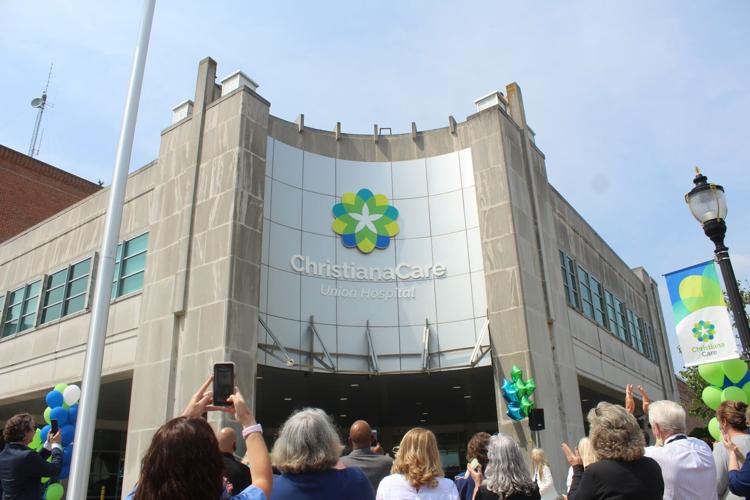
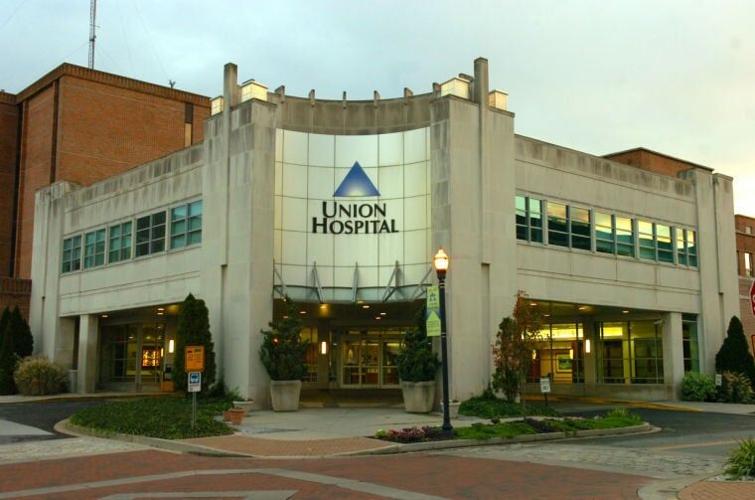
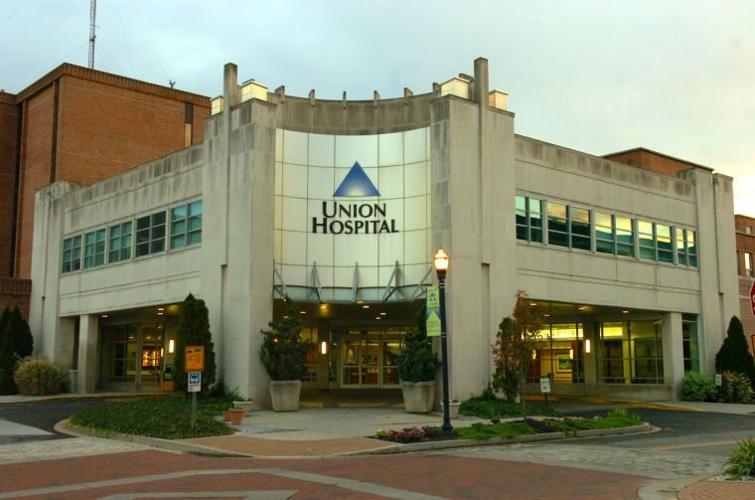
ELKTON — ChristianaCare announced Monday morning that its Family Birthing Center will cease operations June 30 and move its labor and delivery care to Christiana Hospital in Newark, Del.
In April, Union Hospital President Joan Pirrung announced that the labor and delivery services would only be available Monday through Thursday, claiming staffing shortages. However on Monday, she announced the complete closure of the unit, citing a declining birth rate as well as quality and safety concerns.
Pirrung said Monday there is also a decline "in lower-acuity (low risk) birth volumes in our market and an increase in high-risk pregnancies (that) have led to an increase in clinical risk for providers nationally. These high-risk pregnancies require more specialized care, and those challenges are better managed at care sites with more advanced technologies and resources, such as Level III NICUs," she said.
Christiana Hospital is home to a Level III neo-natal intensive care unit.
She also cited the nationwide issue of recruiting and retaining, not only in obstetrics but in other specialties such as urology, cardiology and nephrology.
"A national shortage of specialty physicians, including obstetricians and pediatricians, is expected to increase over the next five years. Despite rigorous recruitment efforts, we have been unable to effectively recruit these physicians to our community, due to low birth volumes, as well as external factors such as geographic location and breadth of skills required," she said.
Elkton Mayor Rob Alt was among those upset about the closure.
"I do not understand how this makes sense," Alt said Monday. "The medical field is not my expertise, but I am extremely disappointed in ChristianaCare, a.k.a. Union Hospital."
Brenda Seekford does work in the healthcare field and she was equally dumbstruck.
"I feel this is a huge injustice to young women of childbearing age," Seekford, from Colora, said.
She added she feels like ChristianaCare Health System, the company that runs Union Hospital, Christiana Hospital, and health centers in Jennersville, Pa., Wilmington and Middletown, Del. is "sending mixed messages as to why they are closing."
Del. Kevin Hornberger (Dist. 35B) called the announcement "deeply troubling news" and said it came as a "disappointing shock."
Pirrung said women would continue to received pre-natal and post-natal care at their obstetrician office, and that the only change is where the baby would be born.
"We will work with them in their third trimester," she said, adding that work would include deciding where the birth would occur, be it at Christiana Hospital in Newark or Upper Chesapeake in Bel Air, Md. or another facility. "We are committed to continuing to provide care to individuals in this county."
"We remain deeply committed to this community," Pirrung said.
At Heritage Health For Women in Rising Sun, the staff is "deeply saddened and disappointed" by this decision.
"For decades, this facility has been a trusted and longstanding staple within Cecil County, serving generations of local families during some of the most significant moments of their lives," said Lisa Tallman, RN, executive director. "The loss of local labor and delivery services is not simply the closure of a hospital department — it is the loss of an essential community resource that has provided care, support, and accessibility for mothers and families throughout our region."
Tallman fears this will create a healthcare desert in Cecil County.
"Based on available U.S. Census and Maryland demographic data, Cecil County has approximately 18,900 to 19,000 women between the ages of 15–44, representing a substantial population requiring access to prenatal, obstetrical, gynecological and women’s healthcare services. Yet access to these services within the county has become increasingly limited, with an estimated OB/GYN-to-patient ratio approaching 1 provider for every 6,333 women," Tallman said.
"Many patients already face extended wait times, delays in establishing prenatal care, and the burden of traveling outside the county for specialized services. The elimination of local maternity services will only intensify these challenges, particularly for low-income families, high-risk pregnancies, and women with transportation limitations," she added.
Vicki Karschner, executive director of Cecil Pregnancy and Family Resource Center in Elkton, shared Tallman's fear.
"During this time of uncertainty, fear, and concern, our desire is to provide accurate information, guidance, and support to help families navigate their options with confidence and care," Karschner said. "Most importantly, we want this to continue to be a joyful and special time as families welcome their new babies."
Hornberger said he is against the change and the manner in which it was handled.
"I was given assurances that the level of care will not diminish with this closure," Hornberger said, adding he is not only concerned about the patients but also those whose jobs are affected by the change. "I remain skeptical."
Tallman echoed that sentiment.
"Dedicated nurses, technicians, support staff, and providers who have faithfully cared for local families now face uncertainty regarding their positions and future roles. At a time when healthcare workforce shortages continue to affect rural communities nationwide, the loss of experienced maternal healthcare personnel further weakens the healthcare infrastructure of Cecil County," she said, adding, "While we recognize the operational and financial pressures healthcare systems face, we believe the healthcare needs of rural families must remain a priority."
Karschner said her organization, now in its 49th year, will "continue providing the same compassionate care and support we have offered."
"As this situation continues to evolve, our team is actively working to stay informed and gather the most current information available so we can best serve or patients," she said, adding, "We have already been in communication with the local hospital, local OB offices and local lactation consultants as we work together to better understand the impact on families in our community. One of our primary concerns is transportation services for patients who may now need to travel to other hospitals for care and delivery."
Seekford said she feels as if there's something not being said about this and other moves ChristianaCare Health System has made in Cecil County, including closing some services outside of Elkton and closing the radiation treatment center.
"Baby boomers are aging, which is something they could have projected when they bought the hospital," Seekford said. "That hospital has been here how long? I was born in Union Hospital."
According to USAFacts.org, deaths in Cecil County are outpacing births, and the county's population growth from 2023 to 2024 was .6%. In that same year, deaths outpaced births by 47. Cecil County's current birth rate is 11.2%, while Maryland's rate is 10.8%, which USAFacts notes is in line with national averages.
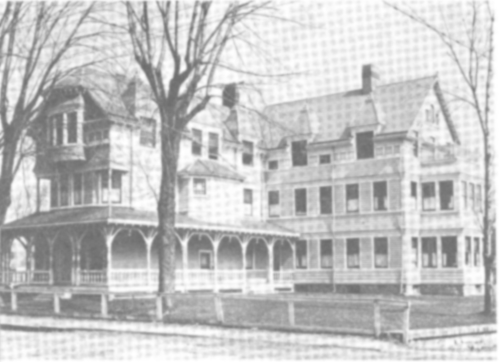
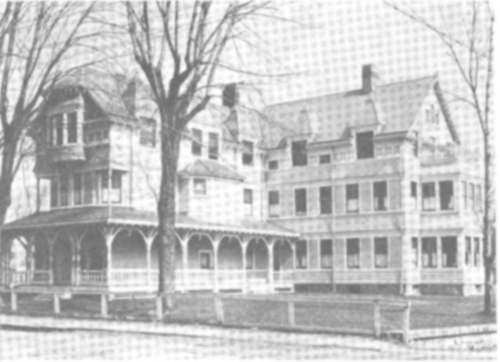
Union Hospital officially opened in a house known as Singerly Manor on Dec. 1, 1908. Its first patient was Helen Davis of Rising Sun. She spent several nights there and went home. Davis was the first of 124 patients to be seen in that first year. Back then, it was operated by a staff of rotating local physicians, a head nurse and four nurses, two of which were nursing students. Doctors would take the train to Elkton from Johns Hopkins Hospital in Baltimore, Md. to perform morning surgeries and then head home on the afternoon train.


